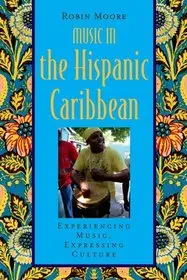
Rövid leírás:
Music in the Hispanic Caribbean explores the musical and cultural traditions of the Spanish-speaking countries of the Greater Antilles (Cuba, the Dominican Republic, and Puerto Rico), a relatively small group of islands with a surprisingly wide-reaching influence on music. The birth place of enduring styles such as salsa and meringue and up-and-coming genres like reggaeton, the music of the region has yet be examined in a standalone volume. Moore uses three themes-the
cultural legacy of the slave trade, the creolization of Caribbean musical styles, and the impact of colonialism and race relations-to survey the region and draw parallels and contrasts between its various traditions Designed to be used as one of several short and inexpensive case study volumes in the Global Music
Series, this volume is appropriate for introductory undergraduate courses in world music or ethnomusicology and for upper-level courses on Caribbean and Latin American music and/or culture.
Több
Hosszú leírás:
Music in the Hispanic Caribbean explores the musical and cultural traditions of the Spanish-speaking countries of the Greater Antilles (Cuba, the Dominican Republic, and Puerto Rico), a relatively small group of islands with a surprisingly wide-reaching influence on music. The birth place of enduring styles such as salsa and meringue and up-and-coming genres like reggaeton, the music of the region has yet be examined in a standalone volume. Moore uses three themes-the cultural
legacy of the slave trade, the creolization of Caribbean musical styles, and the impact of colonialism and race relations-to survey the region and draw parallels and contrasts between its various traditions Designed to be used as one of several short and inexpensive case study volumes in the Global Music
Series, this volume is appropriate for introductory undergraduate courses in world music or ethnomusicology and for upper-level courses on Caribbean and Latin American music and/or culture. Based on the author’s own extensive fieldwork, the text features interviews with performers, eyewitness accounts of performances, and vivid illustrations. The book also features listening activities that enable students to engage critically and actively with the text. The included 70-minute CD contains
examples of music discussed in the text, and supplementary material for instructors will be available on the companion web site.
Több
Tartalomjegyzék:
Foreword
Preface
CD Track List
Introduction
Defining the Caribbean
Music and Race in the Caribbean
Creolization and Diaspora
Music and Spanish Colonization
A Brief History of Colonization
Spanish-Derived Music
Puerto Rican Seis
Cuban Punto
Folk Catholicism and the Dominican Salve
Cultural Legacies of the Slave Trade
History of the Slave Trade
Afro-Cuban Toques de Güiros
Afro-Dominican Salves
Puerto Rican Bomba
Creolized Dance Music
Dominican Merengue
Cuban Son
Puerto Rican Plena
New York Salsa
Transnational Caribbean Musics
The Colonial Contradanza
Bolero and Bachata
Reggaeton
Political Song
The Rise of Nueva Canción
Struggles for Independence in the Hispanic Caribbean
Puerto Rican Nueva Canción
Dominican Nueva Canción
Cuban Nueva Trova and Rap
Dialogues With Blackness
Early Representations of Blackness
Creole Heritage and Classical Music
Latin Jazz
Glossary
Resource Guide
References
Index


