Rövid leírás:
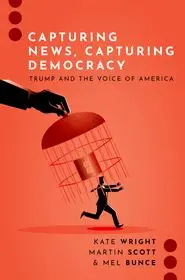
This book tells the chilling story of what happened at Voice of America (VOA) when Trump appointees and their allies captured the public service network. It explains how different forms of politicization combined to change how VOA reported on important events from the Black Lives Matter movement to the presidential election, and its contested aftermath. It also demonstrates how the capture of VOA fed into broader forms of democratic backsliding within the US itself. The book develops a new analytical framework for understanding how media capture unfolds and recommends ways of safeguarding our media and our democracy from future attacks.
Több
Hosszú leírás:
The Voice of America (VOA) is the oldest and largest US government-funded international media organization. In 2020, Donald Trump nominated Michael Pack, a right-wing documentarian and close friend of Steve Bannon, to lead the US Agency for Global Media – the independent federal agency overseeing US-funded international media. During Pack’s seven-month tenure, more than 30 whistleblowers filed complaints against him, and a judge ruled that he had infringed journalists’ constitutional right to freedom of speech.
How did such a major international public service media network become intensely politicized by government allies in such a short time, despite having its editorial independence protected by law?
Capturing News, Capturing Democracy puts these events in historical and international context—and develops a new analytical framework for understanding government capture and its connection to broader processes of democratic backsliding. Drawing from in-depth interviews with network managers and journalists, and analysis of private correspondence and internal documents, Kate Wright, Martin Scott, and Mel Bunce analyze how political appointees, White House officials, and right-wing media influenced VOA— changing its reporting of the Black Lives Matter movement and the 2020 presidential election. The authors stress that leaving the VOA unprotected leaves it and other public media open to targeting by authoritarian leadership and poses serious risks to US democracy. Further, they offer practical recommendations for how to protect the network and other international public service media better in the future.
A free and independent media is crucial to well-functioning societies worldwide. This book draws on a rich and comprehensive data set to analyse how Voice of America became dangerously politicized under the Trump administration — and why VOA still remains vulnerable to government capture, while reminding us why avoiding that path is so crucial for democracies everywhere.
Több
Tartalomjegyzék:
Chapter 1: Introduction
Chapter 2: The Voice of America: A history of Conflict
Chapter 3: Capturing Public Service Media around the World
Chapter 4: Indirect Capture
Chapter 5: Direct Editorial Interventions
Chapter 6: The Post-Election Endgame
Chapter 7: Resistance Strategies and Ongoing Harm
Chapter 8: Conclusion