Rövid leírás:
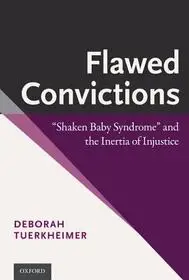
Flawed Convictions: „Shaken Baby Syndrome” and the Inertia of Injustice is the first book to survey the scientific, cultural, and legal history of Shaken Baby Syndrome from inception to formal dissolution.
Több
Hosszú leírás:
The emergence of Shaken Baby Syndrome (SBS) presents an object lesson in the dangers that lie at the intersection of science and criminal law. As often occurs in the context of scientific knowledge, understandings of SBS have evolved. We now know that the diagnostic triad alone does not prove beyond a reasonable doubt that an infant was abused, or that the last person with the baby was responsible for the baby’s condition. Nevertheless, our legal system has failed to absorb this new consensus. As a result, innocent parents and caregivers remain incarcerated and, perhaps more perplexingly, triad-only prosecutions continue even to this day.
Flawed Convictions: „Shaken Baby Syndrome” and the Inertia of Injustice is the first book to survey the scientific, cultural, and legal history of Shaken Baby Syndrome from inception to formal dissolution. It exposes extraordinary failings in the criminal justice system’s treatment of what is, in essence, a medical diagnosis of murder. The story of SBS highlights fundamental inadequacies in the legal response to „science dependent prosecution.” A proposed restructuring of the law contends with the uncertainty of scientific knowledge.
Deborah Tuerkheimer’s Flawed Convictions is a brilliant and timely book that meticulously presents a clear, comprehensive, and thoughtful analysis of the evolution of „shaken baby syndrome” homicide prosecutions, their impact on innocent caregivers, and the failure of the American legal system to self-correct in the face of staggering evidence of its biases and errors. It is a shocking indictment of how one form of junk science has led to scores of wrongful convictions and destroyed hundreds, if not thousands, of innocent lives and families. Tuerkheimer provides important historical context, a framework for understanding the roots of the problem as well as its persistence, and a roadmap out of the current quagmire. Flawed Convictions is an invaluable book that, well-heeded, will help prevent future miscarriages of justice.” -Richard A. Leo, Dean’s Circle Research Scholar and Professor, University of San Francisco School of Law
Több
Tartalomjegyzék:
Acknowledgments
Introduction
Chapter One: A Medical Diagnosis of Crime
The Prosecution Paradigm
The Lure of Blame
Chapter Two: Complications
Scrutiny
The New SBS
Doubtful Convictions
Chapter Three: The Triad Endures
Today’s SBS
Child Abuse Specialization
Prosecutorial Certainty
Staying Power
Chapter Four: Trials
Deciding Guilt
Case on Trial
Chapter Five: Missed Diagnosis
Diagnostic Error
A Legal Perspective on Differential Diagnosis
Anatomy of a Missed Diagnosis
Chapter Six: Confessions
Non-Confession Confessions
Unreliable Confessions
Inside the Interrogation Room
Chapter Seven: Fluky Justice
Acquittals
Dismissals
No-Arrest Cases
Chapter Eight: Guilty Pleas
A System in Flux
When Innocents Plead Guilty
The Meaning of Lopsided Pleas
Chapter Nine: The Limits of Judicial Review
Sufficiency Challenges
Collateral Attack
Chapter Ten: Reform
Improving Medical Outcomes
Upstream Innocence Protection
Downstream Innocence Protection
AFTERWORD
INDEX


