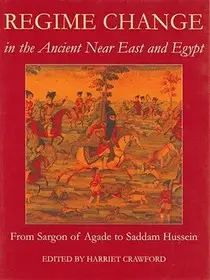
Rövid leírás:
The manner in which government practices and personnel survive the disruption of regime change is an issue of great current relevance. These essays discuss the continuity of administration and royal iconography in successful changes of regime in Egypt, Mesopotamia and Iran. The volume closes with a summary of the recent history of Iraq.
Több
Hosszú leírás:
The manner in which government practices and personnel survive the violent disruption of regime change is an issue of current relevance, yet is a subject which has largely been ignored by modern scholarship. These essays, covering more than four thousand years of history, discuss the continuity of administration and royal iconography in successful changes of regime in Egypt, Mesopotamia and Iran.
Recurring patterns are identified in ten case studies, ranging from late third millennium Mesopotamia to early Islamic Egypt. A summary of the recent history of Iraq suggests that these regularities have lessons for the modern geopolitics of today.
Well illustrated
Több
Tartalomjegyzék:
Steady States: Introduction and acknowledgements
Part I: Mesopotamia and Iran
Dynastic change and institutional administration in Southern Mesopotamia in the latter 3rd millennium BCE: Evidence from seals and sealing practices
The Mesopotamian ‘Rod and Ring’: Icon of Righteous Kingship and Balance of Power between Palace and Temple
Social Change and the Transition from the Third Dynasty of Ur to the Old Babylonian Kingdoms c.2112-1595 BCE
The Transition of Babylonia from the Neo-Babylonian Empire to Achaemenid Rule
Persian conquerors, Babylonian captivators
The Royal Hunt in Islamic Art: a symbol of power or the power of a symbol?
Part II: Egypt
The Hyksos in Egypt 1600 BCE: New Rulers without an Administration
Tradition, innovation and researching the past in Libyan, Kushite, and Saite Egypt
Egypt and the Graeco-Roman world: from Ptolemaic Kingdom to Roman Province
New Rule over Old Structures: Egypt after the Muslim Conquest
Afterword
Regime Change in Iraq from the Mongols to the Present: An Essay in haute vulgarisation


