Rövid leírás:
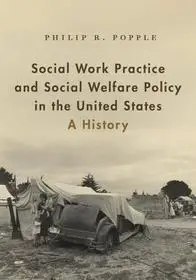
The first new social work history written in over twenty years, Social Work Practice and Social Welfare Policy in the United States identifies, from a historical perspective, major challenges facing the social work profession. Tapping into archival data, the text describes the evolution of social work practice theories and techniques, and discusses social welfare policy and social work practice from the usual „top down” perspective of elites (policymakers,
administrators, academics) while adding the „bottom up” perspective of service recipients and social work practitioners.
Több
Hosszú leírás:
The first new social work history to be written in over twenty years, Social Work Practice and Social Welfare Policy in the United States presents a history of the field from the perspective of elites, as well as service providers and recipients. A particularly unique feature of the book is that it chronicles and analyzes the development of social work practice theory. As with other parts of the book, this is done on two levels: from the top down, looking at
the writings, conference presentations, and training course material developed by leaders of the profession, and from the bottom up, looking at case records for evidence of techniques that were actually applied by social workers in the field. The data for the „bottom up” content in the book was obtained from
archival records of agencies including the Philadelphia Almshouse, the Green Bay Wisconsin Department of Public Welfare, Minneapolis Family and Children’s Services, the New York Charity Organization Society, the Boston Children’s Aid Society, and the Boston Society for the Prevention of Cruelty to Children.
This text also places social work practice in its institutional context. It is argued that social work has had a significant role in three social institutions: public assistance, mental health, and child welfare. With this in consideration, the author argues that social work has completely lost its place in public assistance; has achieved its major professional goal of becoming a fully licensed and privileged provider of mental health services, but is at risk of losing its dominance in this
institution due to the emergence of competing mental health professions; and maintains dominance only in child welfare. He concludes that the profession needs to reengage with public assistance (TANF); develop strategies to regain dominance in mental health (expansion of the DSW as a practice degree is
suggested); and continue to emphasize child welfare as a central professional concern.
Dr. Popples compelling history moves gracefully from tightly-focused stories to sweeping overviews. Readers will be drawn in by his brief micro-histories of poor Americans encountering the welfare state in different eras and places. His overviews make the big story he has to tell understandable to students and general readers alike. Based on an impressive synthesis of secondary and primary sources, this book is not merely an institutional history of social welfare
apparatuses. Popples history ranges from big changes in political economy to the experiences of individual Americans in need.
Több
Tartalomjegyzék:
Chapter 1. Introduction
Chapter 2. Social Welfare in the New Nation, 1776-1865
Chapter 3. America Confronts Poverty, 1776-1860
Chapter 4. Modern America-Modern Problems, 1860-1900
Chapter 5. Scientific Charity, 1850-1900
Chapter 6. Progress in Social Welfare, 1895-1929
Chapter 7. The Birth of a Profession, 1898-1930
Chapter 8. Crises: The Great Depression and World War II
Chapter 9. The Depression-A Crisis for the New Profession, 1930-1945
Chapter 10.America’s Welfare State Experiment, 1945-1974
Chapter 11. Social Work Practice, 1945-1974
Chapter 12. Ending Welfare As We Know It
Chapter 13. Social Work in the Conservative 21st Century Welfare State
Index


